
Table of Contents
If you’ve never attended a press check, you may wonder why some print projects require one while others do not.
For many commercial printing jobs, approving a PDF proof is enough. But for high-profile, color-critical, or high-value projects, a press check provides something no digital proof can fully replicate—the opportunity to review the actual printed sheets on press before the full production run begins.
Whether you’re producing luxury packaging, museum exhibition graphics, annual reports, investor presentations, or premium marketing materials, understanding how a press check works can help ensure your finished project meets expectations before thousands of copies are printed.
What Is a Press Check?
A press check is a scheduled review that takes place after a print job has been set up on the printing press, but before the full production run begins.
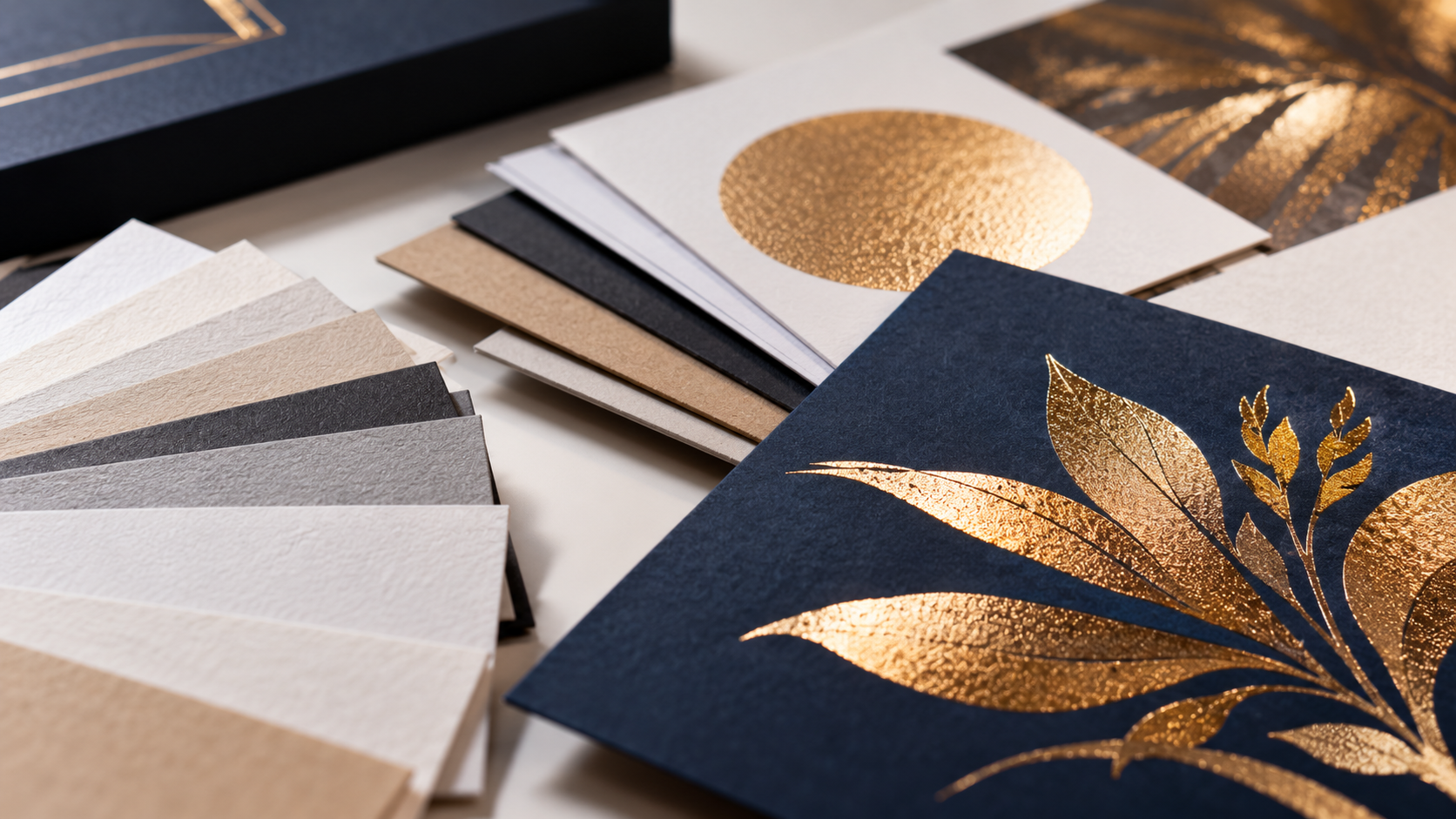
Commercial offset printing requires significant time and expertise to prepare. Once the press is calibrated and running correctly, production becomes highly efficient. While digital and hardcopy proofs provide an excellent preview of the finished piece, they cannot perfectly replicate every variable that occurs during production. Paper characteristics, ink density, press conditions, and lighting all influence how a printed piece ultimately appears. A press check allows these factors to be evaluated together before the production run continues.
Paper characteristics, ink density, press conditions, and viewing environments all influence the final result. A press check allows these factors to be evaluated together before the production run continues.
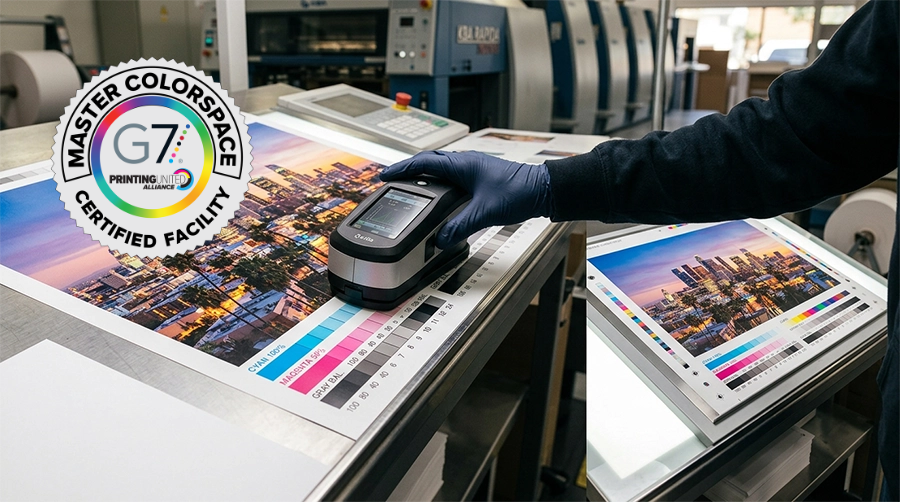
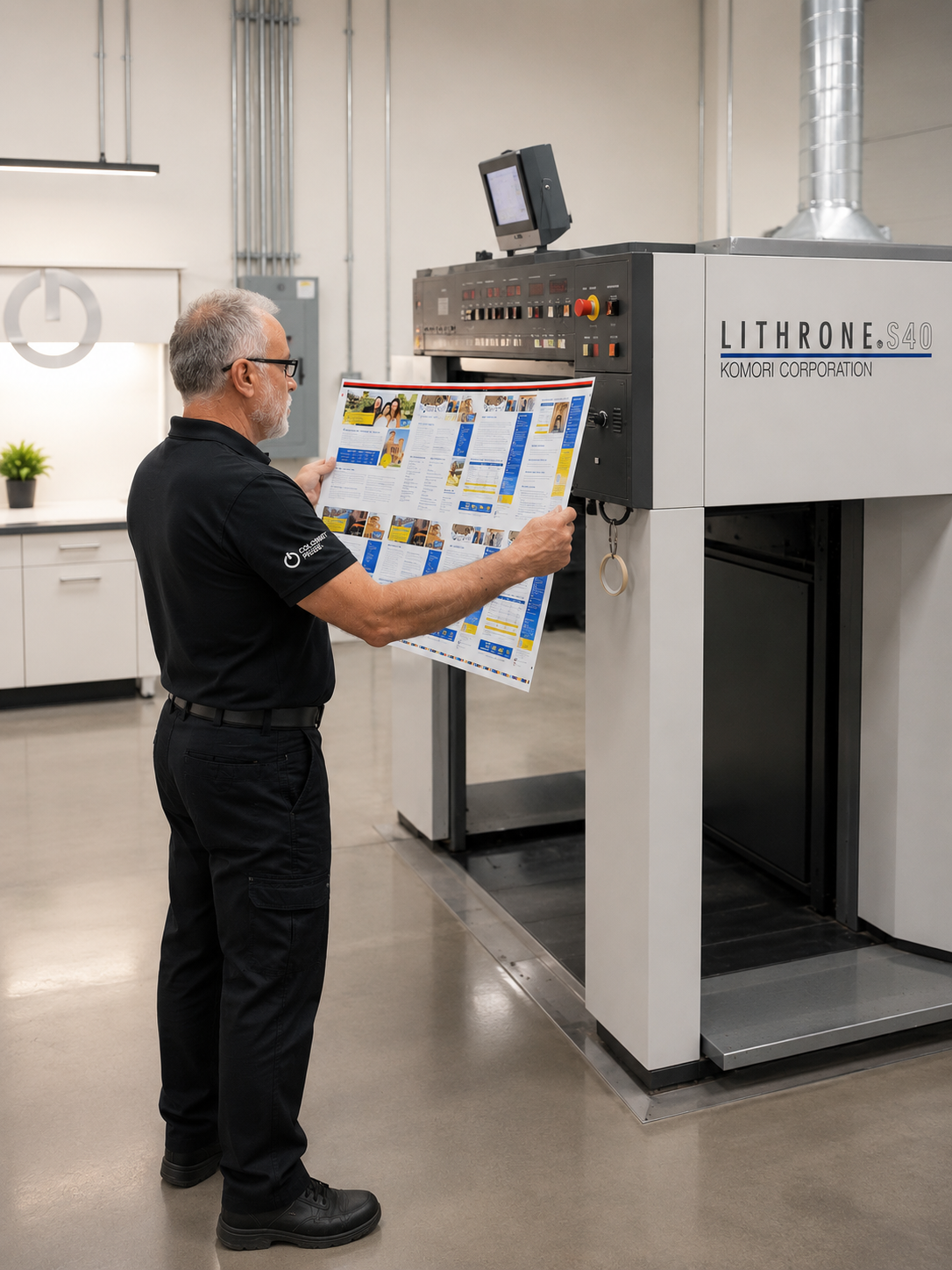
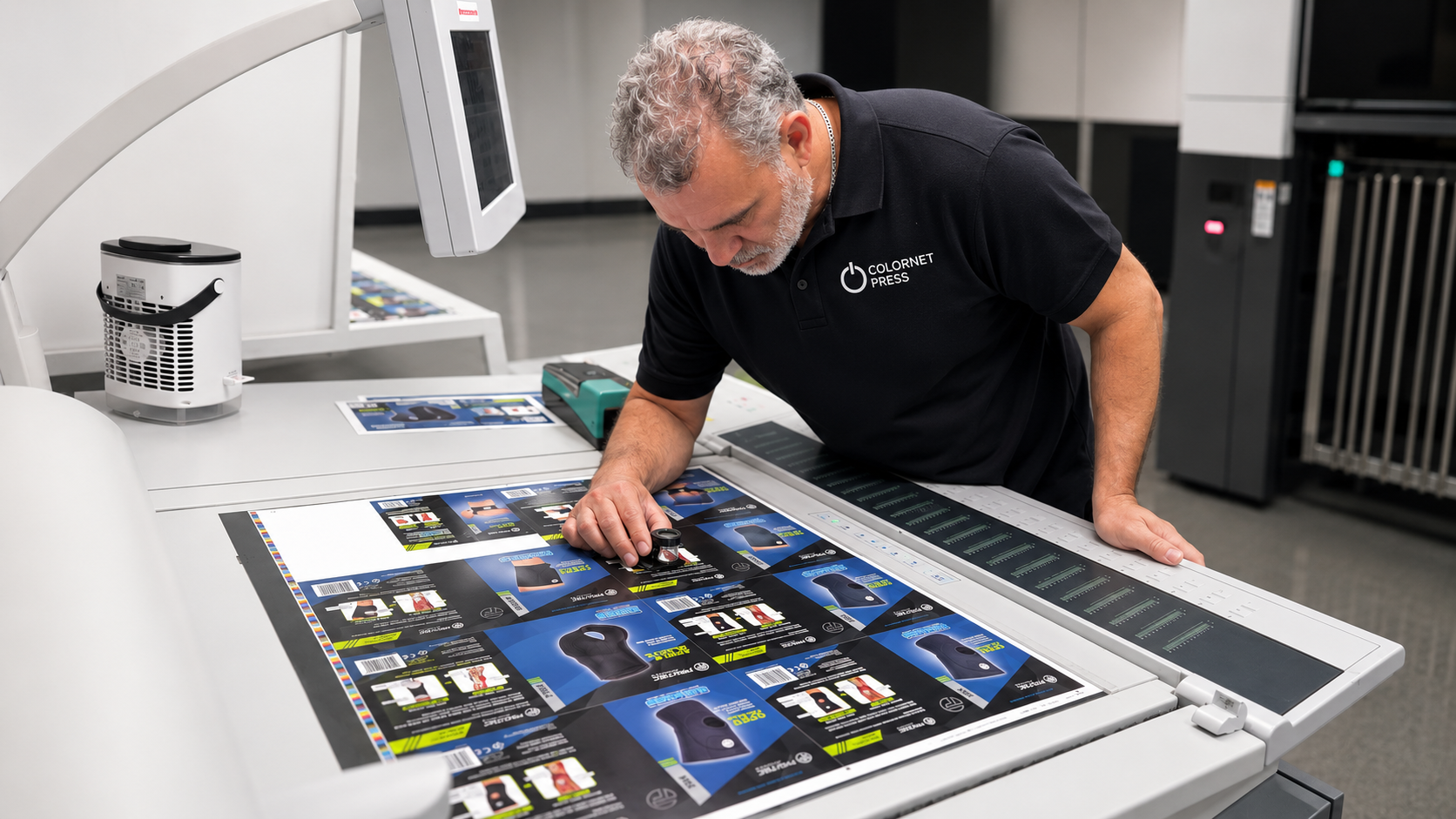
During the press check, printed sheets are pulled directly from the press for review. This gives the client, designer, and press operator an opportunity to confirm color, image quality, registration, paper appearance, and overall presentation while adjustments can still be made.
At Colornet Press, image processing, proof preparation, and press setup are all designed to minimize surprises before production begins. A press check provides one final opportunity to verify that the printed sheet meets expectations before the full production run proceeds.
Not every project requires a press check. They are most valuable for color-critical work, premium marketing materials, luxury packaging, museum graphics, large print quantities, or any project where quality carries significant financial or brand importance.
If you’re attending a scheduled press check, plan to arrive on time. Commercial printing presses are expensive to operate, and timely approvals help keep production moving efficiently for everyone involved.
Which Projects Benefit Most?
Press checks are especially valuable when color accuracy and presentation are essential.
Projects that commonly benefit include:
- Fashion look books
- Annual reports
- Investor presentations
- Brand launch materials
- Museum exhibition graphics
- Luxury packaging
- Premium marketing collateral
- Photography books
- Fine art reproductions
- Retail graphics
- High-end catalogs
When consistency matters across multiple printed pieces—or when your printed materials represent a premium brand—a press check provides valuable peace of mind.
Press Check Checklist
| Review Item | Why It Matters |
|---|---|
| Color accuracy | Ensures brand colors reproduce correctly |
| Registration | Keeps text and graphics perfectly aligned |
| Ink density | Produces consistent color throughout the run |
| Image detail | Preserves highlights, shadows, and fine textures |
| Paper appearance | Confirms the stock performs as expected |
| Overall presentation | Ensures the finished piece matches expectations |
The Process: What to Expect
Before production begins, the press operator carefully calibrates the press to achieve the desired color, registration, and print quality.
Once the press reaches production standards, several printed sheets are pulled for review.
During the press check, everyone evaluates the sheets together to verify that the printed piece matches the approved expectations. Depending on the project, minor production adjustments may be made before the full production run begins.
The goal isn’t to redesign the project—it’s to confirm that everything is reproducing as intended.
What Are You Looking For?
It isn’t about finding mistakes. It’s about confirming quality.
Color Accuracy
Do brand colors appear accurate?
Are photographs reproducing naturally?
Do skin tones, gradients, and solid colors look consistent?
Because you’re reviewing the actual printed sheet, you can evaluate how ink interacts with the chosen paper—something no monitor can perfectly reproduce.
Registration
Commercial printing uses multiple printing plates that must align with exceptional precision.
Proper registration keeps text sharp, images crisp, and prevents unwanted color shadows or blurry edges.
Ink Density and Balance
Press operators monitor ink levels throughout the run to produce smooth solids, clean gradients, and consistent reproduction from the first sheet to the last.
Image Detail
Fine textures, shadow detail, highlights, and small typography should reproduce clearly without plugging, filling in, or disappearing.
Overall Appearance
Sometimes the most important question is also the simplest:
“Does this look exactly the way we expected?”
Viewing the project on the actual paper stock under production conditions often provides a very different perspective than viewing artwork on a computer monitor.
Press Check vs. PDF Proof
A PDF proof allows you to review layout, typography, images, page order, and overall design before production begins.
A press check takes that process one step further by allowing you to evaluate the actual printed piece under real production conditions.
Both are valuable quality-control tools, but they serve different purposes.
Before a project reaches the press, it’s important to review your PDF proof carefully using a reliable PDF viewer such as Adobe Acrobat.
Common Press Check Adjustments
Although major design changes should already be complete, several production adjustments can often be made during a press check, including:
- Fine-tuning color balance
- Adjusting ink density
- Improving shadow detail
- Recovering highlight detail
- Correcting gray balance
- Improving overall contrast
- Fine-tuning overall appearance within acceptable production tolerances
Major design revisions, however, are generally not practical once a project reaches the press. That’s why careful prepress preparation and proof approval remain essential.
Do All Print Jobs Need a Press Check?
No.
Many everyday commercial printing projects can be produced successfully using approved PDF proofs and established production standards.
A press check is most valuable when:
- Color accuracy is especially important.
- The project represents a significant investment.
- Multiple stakeholders require final approval.
- The printed piece represents a premium brand.
- There is very little room for error.
Your commercial printer can help determine whether a press check is appropriate for your specific project.
Getting the Most Out of Your Press Check
A little preparation goes a long way.
Bring approved proofs or color references if applicable. Allow enough time for careful review, and remember that production decisions are collaborative.
The objective isn’t to make endless changes—it’s to ensure everyone is confident before the production run begins.
Don’t hesitate to ask questions during the process. Understanding how the press responds to different papers, inks, and finishing techniques can help you make better production decisions on future projects.
Frequently Asked Questions
What is a press check?
A press check is the opportunity to review the actual printed sheets on the substrate before the full production run begins.
Do all print jobs require a press check?
No. Most commercial printing projects can be produced successfully using approved proofs. They are typically reserved for color-critical, premium, or high-value projects.
How long does a press check take?
Most last between 5 and 20 minutes, depending on the complexity of the project and whether production adjustments are needed.
Can I make design changes during a press check?
Minor ink volume adjustments are common. Major design revisions should be completed during the prepress stage before the job reaches the printing press. Design or content changes at press require new printing plates to be made and additional set-ups, resulting in significant billable costs.
Final Thoughts
A press check provides something no digital proof can fully replicate—the opportunity to evaluate the actual printed product before production is complete.
While not every project requires one, a press check offers valuable peace of mind for projects where color accuracy, quality, and presentation are critical.
When everyone agrees the first sheets meet expectations, the remainder of the production run can move forward with confidence, helping ensure the finished piece accurately reflects the vision established at the beginning of the project.
For premium commercial printing, it is one of the final—and most important—quality-control steps. Investing a small amount of time before production begins can help prevent expensive reprints, ensure consistent color, and provide confidence that your finished materials represent your brand exactly as intended.
For more information, visit our website, and check out our other blogs.