
Color accuracy should not depend on guesswork.
When a project includes carefully selected brand colors, detailed photography, subtle neutrals, or multiple printed components, even a small color shift can change how the finished work feels. A proof may look correct, but will the press sheet match it? Will the color remain consistent throughout the run? What happens when the same campaign is produced using different printing technologies or paper stocks?
Working with a G7 certified printer provides added confidence that color is being managed through a calibrated, measured, and independently evaluated process.
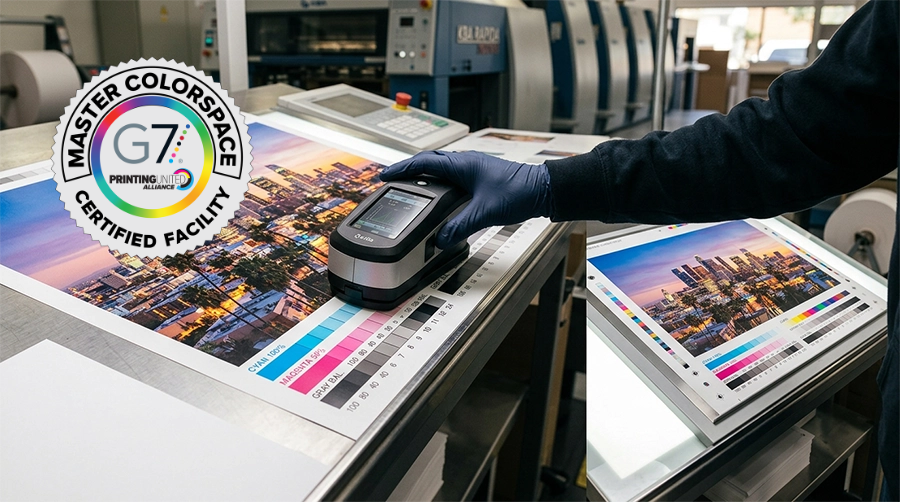
Colornet Press is proud to be recognized as a G7 Certified Facility. For our clients, this certification reinforces the disciplined color-management practices already built into our proofing and production workflows.
But what does G7 certification actually mean, and why should agencies, designers, and brand teams care?
What Is G7 Certification?
G7 is an industry-recognized method for calibrating and controlling print production. It focuses on gray balance and tonality, two foundational elements that strongly influence the overall appearance of a full-color image.
When neutral grays remain balanced and tonal transitions reproduce predictably, other colors tend to appear more natural and consistent. Skin tones, shadows, highlights, photography, and neutral backgrounds can all benefit from a well-controlled print condition.
A G7 certified printer uses defined calibration targets, measurement procedures, and process controls to create a more predictable visual appearance.
According to PRINTING United Alliance, G7 Master Facility Certification provides independent validation that a print provider can produce predictable, color-accurate output aligned with recognized color-management practices.
What Does the “G7” Name Mean?
The “G” refers to gray balance.
The “7” represents the seven primary and secondary colors used to describe a typical print color space:
- Cyan
- Magenta
- Yellow
- Black
- Red
- Green
- Blue
This does not mean G7 adds seven inks to a conventional print job. Instead, the methodology uses gray balance, tonality, and color measurements to establish a shared visual target for print reproduction.
Although most people notice vibrant colors first, neutral balance plays a major role in how the entire image appears. If the grays shift too warm, too cool, too red, or too green, the rest of the image can also appear incorrect.
How Does a Printer Become G7 Certified?
G7 certification is not based on a printer simply stating that it produces accurate color.
The certification process requires a print facility to work with a certified G7 or G7+ Expert, calibrate submitted production devices to established targets, produce verification prints, and submit printed samples and measurement data for independent evaluation.
The general process includes:
- Evaluating the existing print condition
- Calibrating qualified production devices
- Producing verification sheets
- Measuring the printed results
- Submitting samples and data for independent review
- Meeting the required tolerances
- Renewing the certification regularly
Certification applies to the facility and the specific devices or print conditions submitted for evaluation. It is also maintained through renewal rather than being treated as a one-time achievement.
That independent evaluation is an important distinction. It provides outside confirmation that defined color-management standards have been met.
Why Gray Balance Matters to Full-Color Printing
Gray may not seem like the most exciting part of a colorful print project, but it is one of the most important.
In four-color process printing, neutral grays are often created by combining cyan, magenta, and yellow. If those inks are not balanced correctly, the gray can develop an unwanted color cast.
That imbalance may affect:
- Neutral backgrounds
- Black-and-white photography
- Skin tones
- Product images
- Shadows
- Highlights
- Subtle color transitions
- Overall image contrast
By controlling gray balance and tonality, G7 calibration helps establish a more stable foundation for the complete printed image.
This is particularly valuable for color-critical projects where subtle variations are noticeable and the final piece must preserve the intent of the original artwork.
What Are the Benefits of Working With a G7 Certified Printer?
G7 certification is highly technical, but its value to print buyers is practical.
More Predictable Color
A calibrated, measured workflow reduces reliance on subjective visual judgment alone. The production team has defined targets that can be monitored throughout the process.
That creates a more predictable starting point for proofing, press setup, and production.
Better Proof-to-Press Alignment
A proof is only useful when it creates realistic expectations for the printed result.
G7 color-management practices help align proofing and production around recognized visual targets. This supports a closer relationship between the approved proof and the finished press sheet.
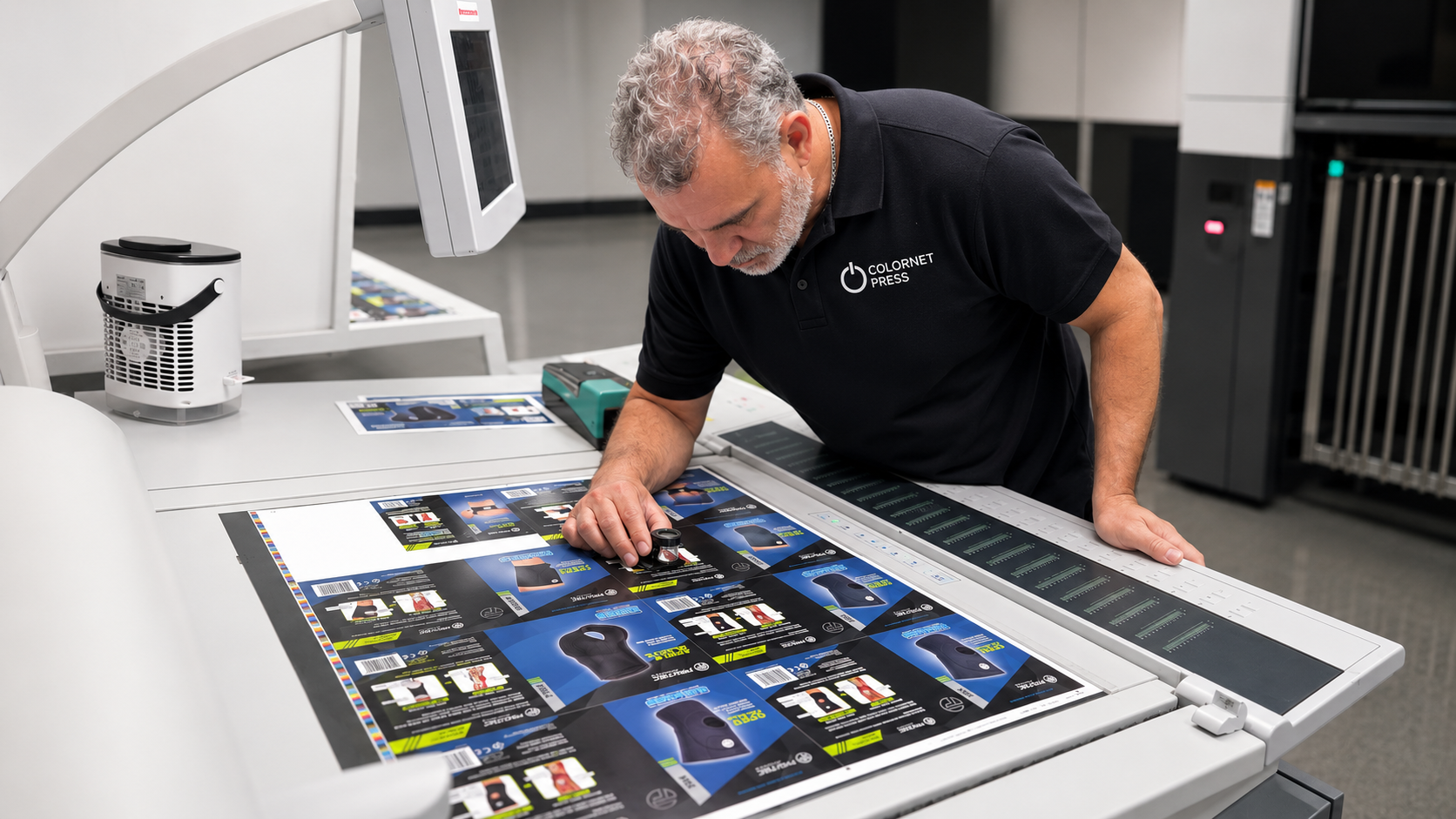
Clients should still understand the limitations of different proofing methods. A PDF displayed on a monitor cannot reproduce every physical characteristic of ink and paper. For especially color-critical work, a contract proof or press check may still be recommended.
Greater Consistency Across a Print Run
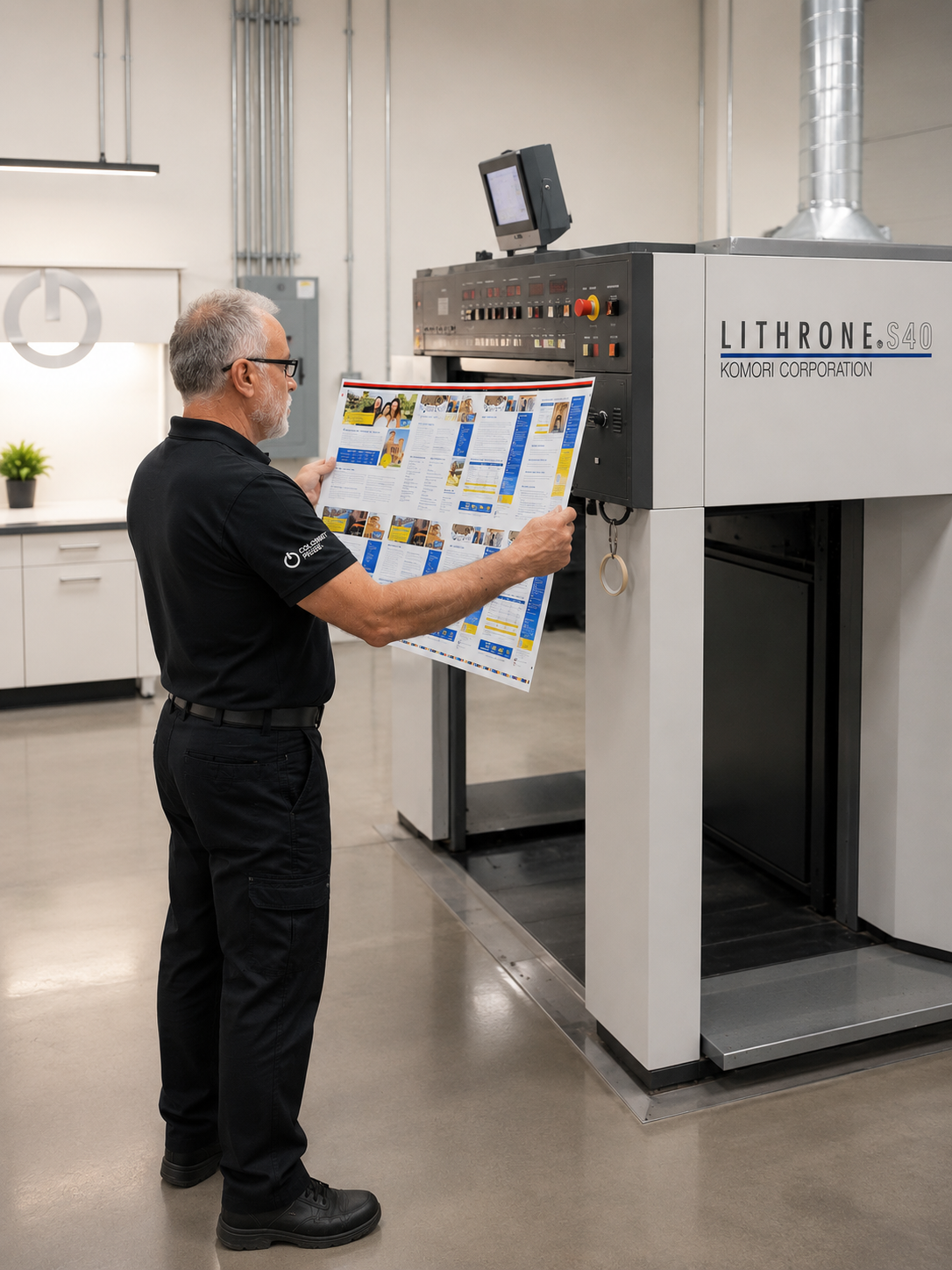
Color can change as a press run progresses if production conditions are not carefully monitored.
A G7 certified printer uses measurement and process controls to help maintain a stable appearance from the beginning of the run through the final sheets.
This is important when printed pieces will be displayed, distributed, or compared together.
A Shared Visual Appearance
Different printing processes and substrates do not have identical color capabilities. Coated paper, uncoated paper, digital printing, offset printing, and large-format materials each reproduce color differently.
G7 does not make every material or printing technology identical. Instead, it helps establish a shared neutral appearance and more consistent tonality across qualified print conditions.
For brands producing multiple campaign components, that common visual foundation can help the pieces feel more cohesive.
Stronger Brand Consistency
Brand colors are part of a company’s identity. When printed materials shift noticeably from one project or format to another, the brand can begin to look inconsistent.
G7 calibration helps printers establish more controlled and repeatable print conditions. This gives agencies and brand teams greater confidence when producing:
- Marketing campaigns
- Annual reports
- Corporate publications
- Museum materials
- Entertainment collateral
- Retail graphics
- Presentation materials
- Multi-piece print programs
Fewer Production Surprises
Print production involves many variables, including ink, paper, equipment, environmental conditions, file preparation, and finishing.
Certification does not eliminate every variable, but it demonstrates that the printer has implemented a formal system for measuring and managing important parts of the process.
That structure can reduce unnecessary adjustments, rework, waste, and last-minute surprises.
Does G7 Certification Guarantee an Exact Color Match?
No printing certification should be interpreted as a guarantee that every color will reproduce identically on every paper, press, or material.
G7 primarily establishes a controlled neutral appearance and predictable tonality. The available color gamut will still depend on factors such as:
- Printing technology
- Ink set
- Paper color
- Paper coating
- Substrate texture
- Surface absorbency
- Finishing and coatings
- The original artwork
A bright color printed on gloss-coated white paper may look different when printed on warm uncoated stock. A backlit graphic will not have the same physical appearance as an offset-printed brochure.
G7 helps manage these differences more predictably. It does not erase the physical properties that make each process and material unique.
When an exact brand or spot color is critical, additional measurement, ink formulation, physical proofs, or press checks may be required.
Why G7 Matters on Uncoated Paper
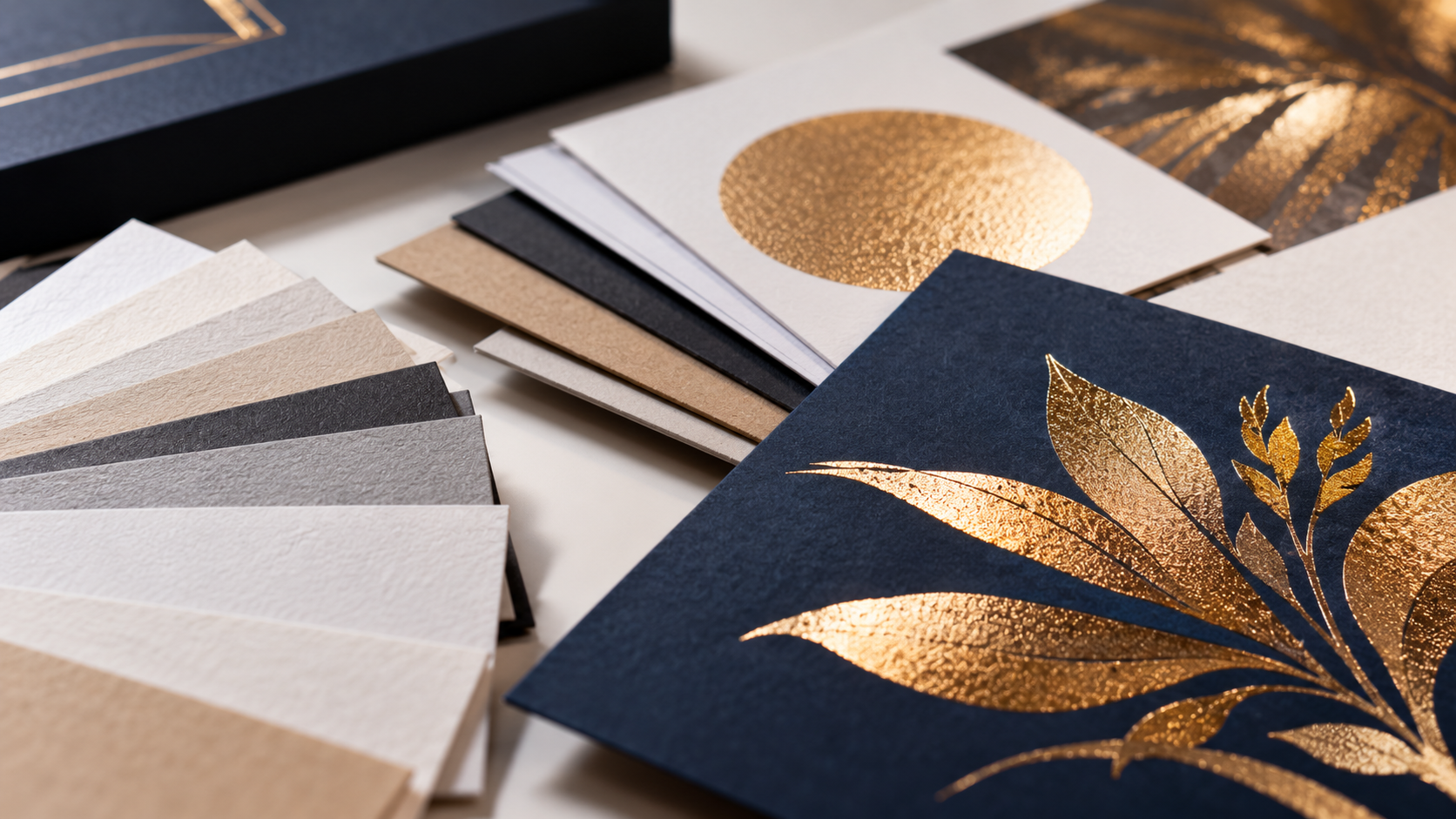
Uncoated paper is valued for its natural texture and sophisticated appearance, but it can be challenging for color reproduction.
Because conventional ink can absorb into an uncoated sheet, colors may lose depth, fine details may soften, and shadows may appear less defined. The paper’s color and absorbency can also influence the finished appearance.
At Colornet Press, G7 color-managed workflows work alongside advanced HUV offset printing and certified proofing on uncoated paper.
HUV ink cures rapidly instead of relying on conventional drying and absorption. This helps preserve sharper detail, cleaner solids, and greater color depth on demanding stocks.
Certification, proofing, measurement, paper expertise, and press technology all contribute to the final result. No single element works in isolation.
G7 Certification Is Part of a Larger Color-Control System
A certification badge matters, but color accuracy does not begin or end with the badge.
A reliable print workflow also requires:
- Careful file preparation
- Appropriate color profiles
- Calibrated proofing
- Image evaluation
- Paper selection
- Press calibration
- Instrument-based color measurement
- Process monitoring
- Experienced production judgment
- Clear communication with the client
At Colornet Press, color is managed from prepress through final production. Every image is evaluated and color-managed before proofing, and the approved target guides the job as it moves toward press.
G7 certification provides independent validation of an important part of that system.
When Should You Look for a G7 Certified Printer?
A G7 certified printer can be particularly valuable when:
- Color accuracy is central to the project
- Brand consistency must be protected
- Photography contains subtle tones and transitions
- Multiple printed components need to work together
- The project will be produced across different processes
- Coated and uncoated materials are involved
- Previous jobs have experienced proof-to-press differences
- Repeat runs need a consistent visual appearance
- Procurement standards require certified color management
- The project has little room for error
Certification may also be important for agencies and internal creative teams that need production partners capable of working within established brand and color specifications.
Questions to Ask Your Printer About Color Management
A badge provides useful evidence, but clients should still discuss the needs of each project with their printer.
Consider asking:
- Which devices or print conditions are included in your G7 certification?
- What type of proof is appropriate for this project?
- How do you measure and monitor color during production?
- How will the selected paper affect the approved color?
- Is a contract proof or press check recommended?
- How should critical brand colors be specified?
- What can be done to improve consistency across multiple components?
- How do you manage color on uncoated paper?
These questions help establish expectations before production begins.
Frequently Asked Questions About G7 Printing
What is a G7 certified printer?
A G7 certified printer is a print provider that has completed a formal calibration and verification process for submitted production devices or print conditions. Printed samples and measurement data must meet established tolerances and undergo independent evaluation.
Is G7 the same as a printing press?
No. G7 is a calibration and process-control methodology. It can be applied to qualified offset, digital, proofing, packaging, and other print-production systems.
Does G7 mean every printed color will look identical?
No. Paper, ink, equipment, coatings, and other physical factors still influence color. G7 provides a common visual foundation based on gray balance and tonality, helping different print conditions produce a more consistent overall appearance.
Does G7 replace a physical proof?
No. The appropriate proofing method depends on the project. G7 supports more predictable proof-to-print alignment, but a contract proof, ink drawdown, production sample, or press check may still be needed for critical work.
How long does G7 certification remain valid?
G7 Master Facility Certification is valid for one year and must be renewed to maintain active status.
Why should designers care about G7?
Designers invest significant effort in photography, color, contrast, and visual detail. A G7 color-managed workflow helps the printer preserve that intent through a more measured and predictable production process.
Work With a G7 Certified Printer in Los Angeles
Colornet Press is proud to be recognized as a G7 Certified Facility.
For our clients, the value is not simply a badge. It is greater confidence that color is being managed through disciplined calibration, measurement, proofing, and production controls.
Combined with our HUV offset printing, uncoated proofing capabilities, digital printing, large-format production, and experienced prepress team, G7 certification strengthens our ability to support demanding projects where color cannot be left to chance.
When getting it right is not optional, work with a production partner that has built color control into the process.
Request a quote or contact Colornet Press to discuss your next color-critical project.